Přečtete na zařízeních:

  • Pocketbook
  • Kindle
  • Smartphone nebo tablet s příslušnou aplikací
  • Počítač s příslušnou aplikací

Nelze měnit velikost písma, formát je proto vhodný spíše pro větší obrazovky.

Více informací v našich návodech

Přečtete na zařízeních:

  • Pocketbook
  • Kindle
  • Smartphone nebo tablet s příslušnou aplikací
  • Počítač s příslušnou aplikací

Více informací v našich návodech

Přečtete na:

Nepřečtete na:

Jak číst e-knihy zabezpečené přes Adobe DRM?
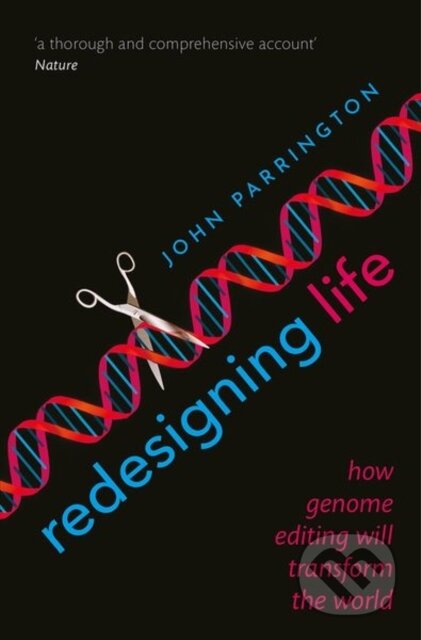
Kniha: Redesigning Life (John Parrington). Oxford University Press, 2020

Redesigning Life

How genome editing will transform the world

Genetic engineering allows the production of the human insulin protein for diabetics, the modification of crops, and the building of synthetic life forms. In the future we could... Číst víc

Nakladatel
Oxford University Press, 2020
Počet stran
384

Genetic engineering allows the production of the human insulin protein for diabetics, the modification of crops, and the building of synthetic life forms. In the future we could even remove genetic diseases from the germ line. In this book, John... Číst víc

  • Brožovaná vazba
  • Angličtina
Vyprodané
Mrzí nás to, všechny kusy tohoto titulu se už bohužel prodaly a nemáme ho na skladě my ani distributor :( Teoreticky ale můžete mít štěstí v některých jiných obchodech, které ještě neprodaly poslední kusy.

Potřebujete poradit knihu?

Zeptejte se online knihkupce!

Knihomolský pomocník

Proč nakupovat knihy na Martinus.cz?

  • Tituly skladem doručujeme do druhého dne
  • Knihomolská záložka ke každému nákupu
  • Více než 9 000 výdejních míst

Naši skřítci doporučují

Olásce a pravdě v časech tísně a lží. Dojemný příběh mladé letkyně. Kniha Píseň nad městem, Ewald Arenz. NAKLADATEL Host, 2026. Chci si přečíst.

Více o knize

Since the birth of civilisation, human beings have manipulated other life-forms. We have selectively bred plants and animals for thousands of years to maximise agricultural production and cater to our taste in pets. The observation of the creation of artificial animal and plant variants was a key stimulant for Charles Darwin's theory of evolution. The ability to directly engineer the genomes of organisms first became possible in the 1970s, when the gene for human insulin was introduced into bacteria to produce this protein for diabetics. At the same time, mice were modified to produce human growth hormone, and grew huge as a result. But these were only our first tottering steps into the possibilities of genetic engineering.In the past few years, the pace of progress has accelerated enormously. We can now cut and paste genes using molecular scissors with astonishing ease, and the new technology of genome editing can be applied to practically any species of plants or animals. 'Mutation chain reaction' can be used to alter the genes of a population of pests, such as flies; as the modified creatures breed, the mutation is spread through the population, so that within a few generations the organism is almost completely altered. At the same time, scientists are also beginning to synthesize new organisms from scratch.These new technologies hold much promise for improving lives. Genome editing has already been used clinically to treat AIDS patients, by genetically modifying their white blood cells to be resistant to HIV. In agriculture, genome editing could be used to engineer species with increased food output, and the ability to thrive in challenging climates. New bacterial forms may be used to generate energy. But these powerful new techniques also raise important ethical dilemmas and potential dangers, pressing issues that are already upon us given the speed of scientific developments. To what extent should parents be able to manipulate the genetics of their offspring — and would designer babies be limited to the rich? Can we effectively weigh up the risks from introducing synthetic lifeforms into complex ecosystems? In this extensively revised paperback edition, John Parrington explains the nature and possibilities of these new scientific developments, which could usher in a brave, new world. We must rapidly come to understand its implications if we are to direct its huge potential to the good of humanity and the planet.
Naše katalogové číslo
4067177
Originální název
Redesigning Life
Počet stran
384
Vazba
brožovaná vazba
Rozměr
195×129 mm
Hmotnost
286 g
ISBN
9780198766834
Datum vydání
27. 8. 2020
Jazyk
angličtina
Nakladatel
Oxford University Press
Kategorizace

Našli jste chybu nebo škodlivý obsah? Dejte nám, prosím, vědět!

Nahlásit chybu nebo škodlivý obsah

Máte o knize více informací než je na této stránce nebo jste našli chybu? Budeme vám velmi vděční, když nám pomůžete s doplněním informací na našich stránkách.

Hodnocení

Jak se líbila kniha vám?

Obchodní název
Oxford Univesity Press
Adresa
Great Clarendon Street OX2 6DP
Oxford
E-mail
info@oup.com
Nepropadejte panice!