Přečtete na zařízeních:

  • Pocketbook
  • Kindle
  • Smartphone nebo tablet s příslušnou aplikací
  • Počítač s příslušnou aplikací

Nelze měnit velikost písma, formát je proto vhodný spíše pro větší obrazovky.

Více informací v našich návodech

Přečtete na zařízeních:

  • Pocketbook
  • Kindle
  • Smartphone nebo tablet s příslušnou aplikací
  • Počítač s příslušnou aplikací

Více informací v našich návodech

Přečtete na:

Nepřečtete na:

Jak číst e-knihy zabezpečené přes Adobe DRM?
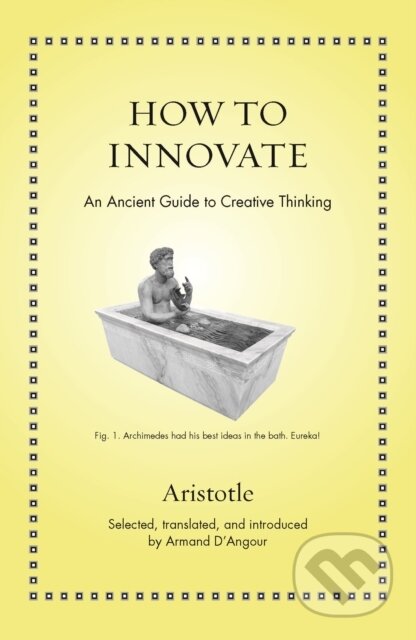
Kniha: How to Innovate (Aristotle). Princeton University Press, 2021

How to Innovate

An Ancient Guide to Creative Thinking

What we can learn about fostering innovation and creative thinking from some of the most inventive people of all times—the ancient GreeksWhen it comes to innovation and creative... Číst víc

Série
Ancient Wisdom for Modern Readers
Nakladatel
Princeton University Press, 2021
Počet stran
168

What we can learn about fostering innovation and creative thinking from some of the most inventive people of all times—the ancient GreeksWhen it comes to innovation and creative thinking, we are still catching up with the ancient Greeks. Between 800... Číst víc

  • Pevná vazba
  • Angličtina
Cena: 388 Kč
-16 %
Původní cena 463 Kč
Toto je nejnižší cena titulu v internetovém knihkupectví za posledních 30 dní před zavedením této slevy.
U dodavatele 3 ks
Posíláme do 6 – 7 dnů
Tuto knihu momentálně nemáme na skladě, ale většinou vám ji dokážeme sehnat a odeslat do 6 – 7 dnů. A pokusíme se to zvládnout i o něco rychleji!

Potřebujete poradit knihu?

Zeptejte se online knihkupce!

Knihomolský pomocník

Proč nakupovat knihy na Martinus.cz?

  • Tituly skladem doručujeme do druhého dne
  • Knihomolská záložka ke každému nákupu
  • Více než 9 000 výdejních míst

Naši skřítci doporučují

Vražda mezi přáteli, Liz Lawson. NAKLADATEL CooBoo CZ, 2026. Chci si přečíst.

Více o knize

What we can learn about fostering innovation and creative thinking from some of the most inventive people of all times—the ancient GreeksWhen it comes to innovation and creative thinking, we are still catching up with the ancient Greeks. Between 800 and 300 BCE, they changed the world with astonishing inventions—democracy, the alphabet, philosophy, logic, rhetoric, mathematical proof, rational medicine, coins, architectural canons, drama, lifelike sculpture, and competitive athletics. None of this happened by accident. Recognizing the power of the new and trying to understand and promote the conditions that make it possible, the Greeks were the first to write about innovation and even the first to record a word for forging something new. In short, the Greeks “invented” innovation itself—and they still have a great deal to teach us about it. How to Innovate is an engaging and entertaining introduction to key ideas about—and examples of—innovation and creative thinking from ancient Greece. Armand D’Angour provides lively new translations of selections from Aristotle, Diodorus, and Athenaeus, with the original Greek text on facing pages. These writings illuminate and illustrate timeless principles of creating something new—borrowing or adapting existing ideas or things, cross-fertilizing disparate elements, or criticizing and disrupting current conditions. From the true story of Archimedes’s famous “Eureka!” moment, to Aristotle’s thoughts on physical change and political innovation, to accounts of how disruption and competition drove invention in Greek warfare and the visual arts, How to Innovate is filled with valuable insights about how change happens—and how to bring it about.

Našli jste chybu nebo škodlivý obsah? Dejte nám, prosím, vědět!

Nahlásit chybu nebo škodlivý obsah

Máte o knize více informací než je na této stránce nebo jste našli chybu? Budeme vám velmi vděční, když nám pomůžete s doplněním informací na našich stránkách.

Hodnocení

Jak se líbila kniha vám?

Jestli je na světě něco, za co by stálo umřít, je určitě lepší zůstat kvůli tomu naživu.
Kniha: Hlava XXII (Joseph Heller), 2016
Hlava XXII
  • Joseph Heller