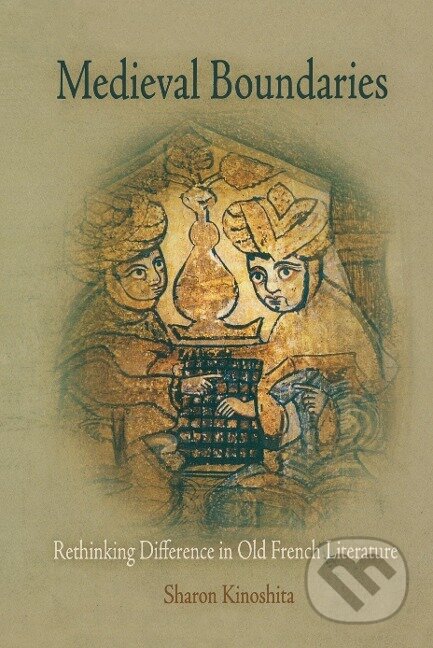
Medieval BoundariesRethinking Difference in Old French LiteratureSharon Kinoshita"From beginning to end, Kinoshita drives home her innovative thesis: that the formation of French literary texts between 1150 and 1225 cannot adequately be understood without reference to various types of cross-cultural contact between French-speaking nobles and those perceived by them as cultural, religious, and linguistic 'others.'"--E. Jane Burns, University of North Carolina"Kinoshita has produced a book of major importance. Her command of the Francophone Middle Ages should exert an important critical influence on the greater field of Middle English and should also be recognized as an important contribution to the prehistory of postcolonial studies."--David Wallace, University of Pennsylvania"I highly recommend this timely study as one of the most innovative, cohesive, and ambitious I have read--one that is capable of reinvigorating medieval literary studies in the Romance languages at the undergraduate and graduate level and will be a de rigueur citation in any future bibliography of the period."--Medieval ReviewIn Medieval Boundaries, Sharon Kinoshita examines the role of cross-cultural contact in twelfth- and early thirteenth-century French literature. Starting from the observation that many of the earliest and best-known works of the French literary tradition are set on or beyond the borders of the French-speaking world, she reads the Chanson de Roland, the lais of Marie de France, and a variety of other texts in an expanded geographical frame that includes the Iberian peninsula, the Welsh marches, and the eastern Mediterranean. In Kinoshita's reconceptualization of the geographical and cultural boundaries of the medieval West, such places become significant not only as sites of conflict but also as spaces of intense political, economic, and cultural negotiation.An important contribution to the emerging field of medieval postcolonialism, Kinoshita's work explores the limitations of reading the literature of the French Middle Ages as an inevitable link in the historical construction of modern discourses of Orientalism, colonialism, race, and Christian-Muslim conflict. Rather, drawing on recent historical and art historical scholarship, Kinoshita uncovers a vernacular culture at odds with official discourses of crusade and conquest. Situating each work in its specific context, she brings to light the lived experiences of the knights and nobles for whom this literature was first composed and--in a series of close readings informed by postcolonial and feminist theory--demonstrates that literary representations of cultural encounters often provided the pretext for questioning the most basic categories of medieval identity.Awarded honorable mention for the 2007 Modern Language Association Aldo and Jeanne Scaglione Prize for French and Francophone StudiesSharon Kinoshita is Professor of Literature at the University of California, Santa Cruz.The Middle Ages Series2006 | 320 pages | 6 x 9 | 11 illus.ISBN 978-0-8122-3919-5 | Cloth | $59.95s | £39.00 ISBN 978-0-8122-0248-9 | Ebook | $59.95s | £39.00 World Rights | LiteratureShort copy:"Kinoshita has produced a book of major importance. Her command of the Francophone Middle Ages should exert an important critical influence on the greater field of Middle English and should also be recognized as an important contribution to the prehistory of postcolonial studies."--David Wallace, University of Pennsylvania