Přečtete na zařízeních:

  • Pocketbook
  • Kindle
  • Smartphone nebo tablet s příslušnou aplikací
  • Počítač s příslušnou aplikací

Nelze měnit velikost písma, formát je proto vhodný spíše pro větší obrazovky.

Více informací v našich návodech

Přečtete na zařízeních:

  • Pocketbook
  • Kindle
  • Smartphone nebo tablet s příslušnou aplikací
  • Počítač s příslušnou aplikací

Více informací v našich návodech

Přečtete na:

Nepřečtete na:

Jak číst e-knihy zabezpečené přes Adobe DRM?
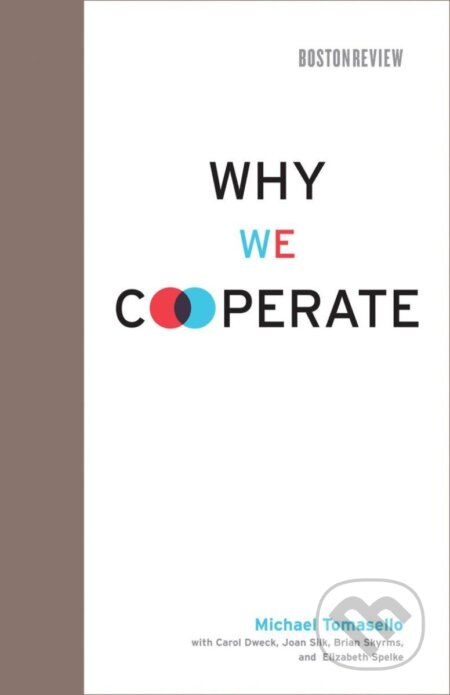
Kniha: Why We Cooperate (Michael Tomasello). MIT Press, 2009

Why We Cooperate

Understanding cooperation as a distinctly human combination of innate and learned behavior. Drop something in front of a two-year-old, and she's likely to pick it up for you.... Číst víc

Série
Boston Review Books
Nakladatel
MIT Press, 2009
Počet stran
208

Understanding cooperation as a distinctly human combination of innate and learned behavior. Drop something in front of a two-year-old, and she's likely to pick it up for you. This is not a learned behavior, psychologist Michael Tomasello argues.... Číst víc

  • Pevná vazba
  • Angličtina
Cena: 428 Kč
Na objednávku
Dodání může trvat více než 30 dní
Tento produkt je na objednávku a jeho dodání může trvat i více než 30 dnů. Uděláme ale všechno pro to, abychom vaši objednávku odeslali co nejdříve a o její cestě vás budeme včas informovat.

Potřebujete poradit knihu?

Zeptejte se online knihkupce!

Knihomolský pomocník

Proč nakupovat knihy na Martinus.cz?

  • Tituly skladem doručujeme do druhého dne
  • Knihomolská záložka ke každému nákupu
  • Více než 9 000 výdejních míst

Naši skřítci doporučují

Simona Monyova, Kde končí láska a začína manipulace. Kniha Deník citového vyděrače, Simona Monyova. Nakladatelství  Belami, 2026. Chci si přečíst

Více o knize

Understanding cooperation as a distinctly human combination of innate and learned behavior. Drop something in front of a two-year-old, and she's likely to pick it up for you. This is not a learned behavior, psychologist Michael Tomasello argues. Through observations of young children in experiments he himself has designed, Tomasello shows that children are naturally—and uniquely—cooperative. Put through similar experiments, for example, apes demonstrate the ability to work together and share, but choose not to. As children grow, their almost reflexive desire to help—without expectation of reward—becomes shaped by culture. They become more aware of being a member of a group. Groups convey mutual expectations, and thus may either encourage or discourage altruism and collaboration. Either way, cooperation emerges as a distinctly human combination of innate and learned behavior. In Why We Cooperate, Tomasello's studies of young children and great apes help identify the underlying psychological processes that very likely supported humans' earliest forms of complex collaboration and, ultimately, our unique forms of cultural organization, from the evolution of tolerance and trust to the creation of such group-level structures as cultural norms and institutions. Scholars Carol Dweck, Joan Silk, Brian Skyrms, and Elizabeth Spelke respond to Tomasello's findings and explore the implications.
Naše katalogové číslo
3039279
Počet stran
208
Vazba
pevná vazba
Rozměr
124×185 mm
Hmotnost
288 g
ISBN
9780262013598
Rok vydání
2009
Jazyk
angličtina
Série
Boston Review Books
Nakladatel
MIT Press
Kategorizace

Našli jste chybu nebo škodlivý obsah? Dejte nám, prosím, vědět!

Nahlásit chybu nebo škodlivý obsah

Máte o knize více informací než je na této stránce nebo jste našli chybu? Budeme vám velmi vděční, když nám pomůžete s doplněním informací na našich stránkách.

Hodnocení

Jak se líbila kniha vám?

Pokud chceš vědět, jaký někdo doopravdy je, všimni si, jak se chová ke svým podřízeným, ne k sobě rovným.